
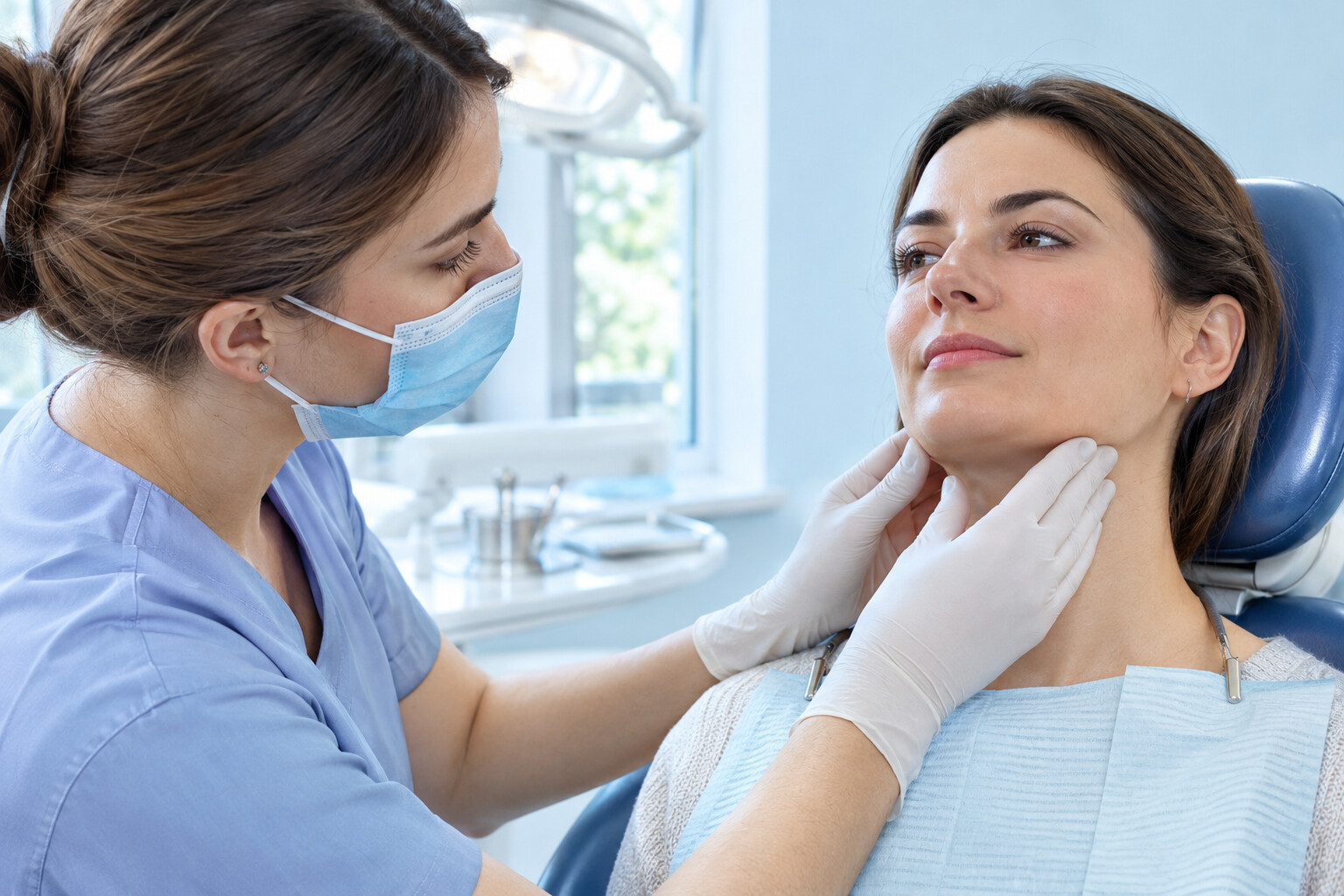
A dental examination involves more than looking for cavities. Your dentist also checks the soft tissues of your mouth and may feel around your jaw and neck. This part of the visit can help identify changes that need a closer look, including possible signs of oral cancer.
Knowing what the examination involves can make it easier to ask questions and explain anything you have noticed between appointments.
What does an oral cancer screening involve?
The American Dental Association’s oral cancer guideline recommends an updated health and dental history, followed by a conventional visual and touch examination inside and outside the mouth for adult patients.
Your dentist may look at the lips, tongue and other mouth tissues and feel for unusual changes. If a step is unfamiliar, ask what is being checked. You can also tell the team if you need a pause or an explanation before they continue.
Tell your dentist about changes, even if they do not hurt
The Canadian Dental Association lists warning signs such as red or white patches, lumps, changes in tissue texture, unexplained bleeding or numbness, sores that do not heal and difficulty swallowing.
These symptoms do not establish a diagnosis on their own. They are reasons to arrange an assessment. The CDA advises reporting mouth changes to your dentist right away, rather than waiting for your next scheduled checkup.
When you call, explain where the change is, when it began and whether it is getting larger, returning or affecting eating or swallowing. A dated note or photograph may help you describe its history, but it cannot replace an examination.
What if the dentist finds something unusual?
A screening examination is a first step, not a definitive cancer diagnosis. Depending on the finding, the dentist will explain the next step. For a suspicious lesion, the ADA guideline recommends a biopsy or referral to a specialist without delay.
A biopsy involves collecting tissue for examination. Being referred does not itself mean you have cancer. Ask who will arrange the appointment, how you will receive results and whom to contact if you have not heard back.
Four questions to bring to your visit
- Is there a specific area you want to examine or monitor?
- What changes should prompt me to contact you before my next appointment?
- If follow-up is needed, what is the timeframe and who arranges it?
- How do my health history and habits affect the advice you recommend?
Share an up-to-date medication list and any changes in your health history. Discuss tobacco and alcohol use openly so your dentist has useful information, rather than trying to guess which details matter.
Frequently asked questions
Does a normal screening guarantee that I do not have oral cancer?
No examination offers that guarantee. Keep reporting new or persistent changes, even after a recent dental visit. Screening and a diagnostic investigation are different steps.
Should I wait until a sore becomes painful?
No. Pain is not a requirement for having a change checked. Contact your dentist about a sore that does not heal, a new lump or an unusual patch.
Do I need a special light or saliva test?
The ADA guideline does not recommend salivary or light-based adjuncts for evaluating lesions for malignancy. A careful clinical examination and appropriate follow-up remain central. Ask your dentist what is recommended for your finding and why.
Arrange an examination at Prime Dental
Our general and family dentistry team can discuss your examination questions. Request an appointment or call (604) 941-0111. If you have noticed a new mouth change, mention it when booking so the team can advise you about timing.
Prime Dental is at #203 – 2227 McAllister Ave., Port Coquitlam, BC V3C 2A9. Email: info@prime-dental.ca.
This article provides general information and cannot diagnose a mouth change. Seek an individual assessment from your dental or medical professional.