
Why You Shouldn’t Ignore Food Frequently Getting Stuck Between the Same Teeth
Most people have experienced food getting caught between their teeth after a meal. While this is usually harmless, repeatedly having food trapped in the same spot may indicate an underlying dental problem. At Prime Dental in Port Coquitlam, we encourage patients to pay attention to these small signs because they can help identify issues before they become more serious.
When Is Food Getting Stuck a Concern?
If food occasionally becomes lodged between your teeth, it is usually not a cause for concern. However, if it happens in the same location almost every day, it may be time to have that area examined.
Patients searching for a dentist near me are often surprised that something as simple as trapped food can point to changes in the teeth or gums.
Common Reasons Food Gets Trapped
Worn or Damaged Fillings
Older fillings can wear down or develop small gaps that allow food to collect between teeth.
Tooth Movement
Teeth naturally shift over time. Even slight movement can create new spaces where food becomes trapped.
Gum Recession
As gums recede, the spaces between teeth may become larger, making it easier for food particles to collect.
Small Cavities
Early decay can change the shape of a tooth, creating areas where food is more likely to become lodged.
Why Trapped Food Shouldn’t Be Ignored
Food that remains between teeth feeds bacteria, increasing plaque accumulation and the risk of:
- Tooth decay
- Bad breath
- Gum inflammation
- Bleeding gums
- Periodontal disease
The earlier these issues are identified, the easier they are often to treat.
Signs You Should Schedule a Dental Visit
- Food consistently gets stuck in the same location
- Your gums bleed while flossing that area
- You notice tenderness between two teeth
- There is a persistent bad taste or bad breath
- The space seems to be getting larger
Routine examinations through our dental services allow dentists to identify these problems before they progress.
How Your Dentist Finds the Cause
Your dentist will carefully examine the teeth, gums, and any existing restorations. Digital X-rays may also be recommended to detect cavities or changes that are not visible during a routine visual examination.
What Treatments May Help?
Treatment depends on the underlying cause and may include:
- Replacing a worn filling
- Treating a cavity
- Professional cleaning to remove plaque and tartar
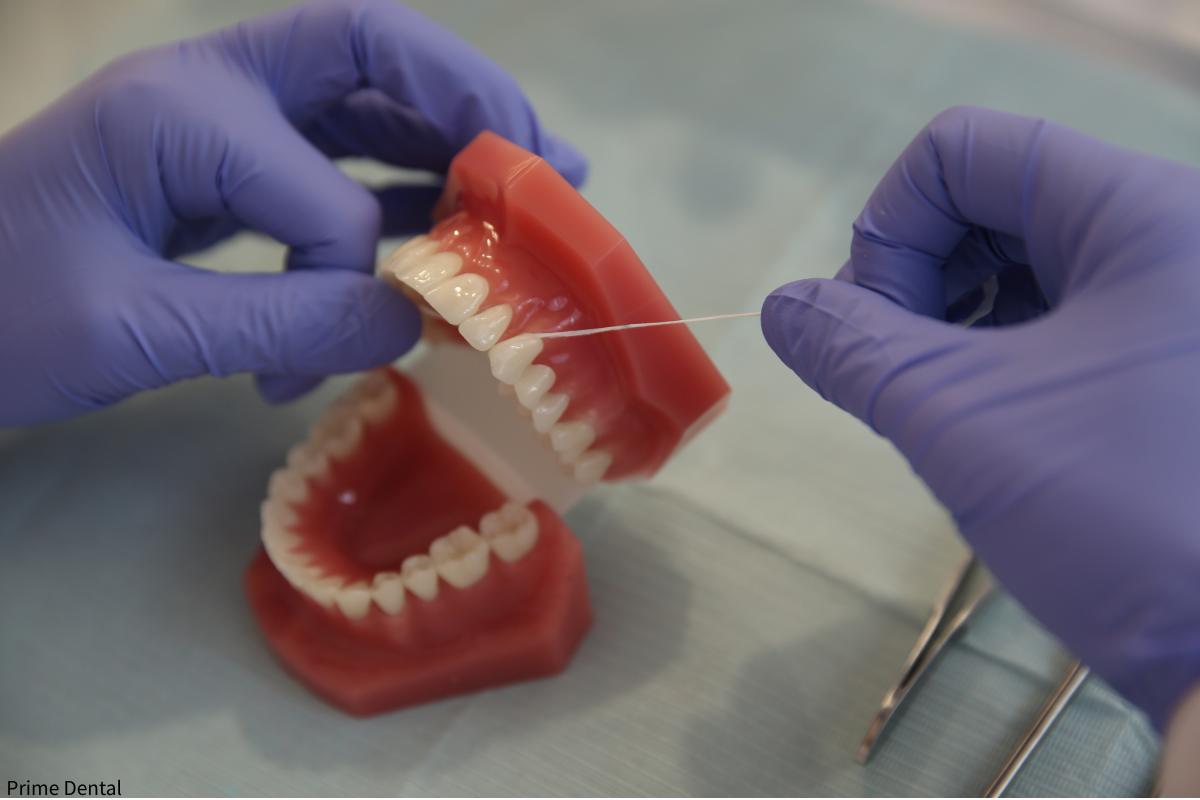
- Recommendations for improved flossing techniques
- Monitoring the area during future checkups
How to Reduce Food Trapping at Home
- Floss daily using proper technique
- Brush twice each day with fluoride toothpaste
- Rinse with water after meals when brushing is not possible
- Avoid forcing sharp objects between your teeth
- Keep up with regular dental cleanings
Families searching for family dentistry near me often find that preventive care helps identify these concerns before they lead to discomfort.
Prevention Is the Best Approach
Small dental changes often develop gradually. Regular checkups allow your dentist to detect worn restorations, early decay, or gum changes long before they become painful.
For more preventive oral health tips, visit our Prime Dental blog.
How Prime Dental Can Help
At Prime Dental, we take the time to identify the reason behind recurring dental concerns instead of simply treating the symptoms. Our comprehensive examinations help detect early problems, allowing for more conservative treatment whenever possible.
Patients seeking affordable dental care in Coquitlam benefit from preventive care that protects both their oral health and long-term dental investment.
Don’t Ignore the Little Things
Food repeatedly getting stuck between the same teeth may seem like a minor inconvenience, but it can sometimes be an early warning sign of a developing dental issue. Having it evaluated early can help prevent more extensive treatment later.
If you’ve noticed this happening regularly, we invite you to contact Prime Dental to schedule a dental examination.