
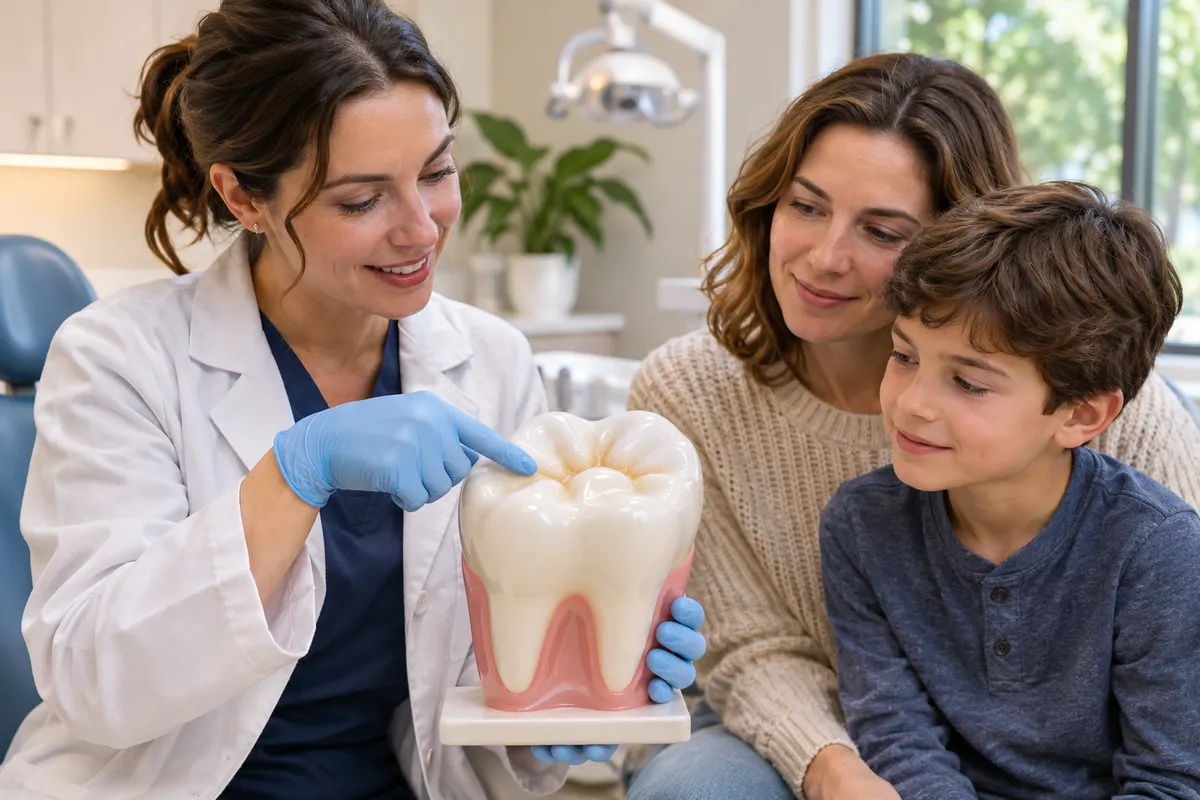
When your child’s first permanent molars come in, you might not notice right away. They appear at the very back, behind the baby teeth, without pushing a tooth out. That makes this a good time to ask your dentist whether the new molars could benefit from dental sealants.
What Do Dental Sealants Do?
Sealants are thin protective coatings that cover the grooves on the chewing surfaces of back teeth. Those grooves can be narrow enough that toothbrush bristles don’t reach all the way into them. A sealant covers those spots, helping keep out food and bacteria that contribute to cavities.
Sealants protect the surfaces they cover. They do not replace brushing with fluoride toothpaste, cleaning between teeth or regular dental care.
When Should You Ask About Sealants?
First permanent molars usually come in around age six and second permanent molars around age twelve, though timing varies. The CDC’s sealant guide recommends asking about them soon after the molars come in. You don’t need to identify the teeth yourself. At the next checkup, try asking: “Have any permanent molars come in, and would any benefit from a sealant?”
The dentist can check how far each tooth has come through, how deep its grooves are and whether your child has had cavities before. If a tooth is only partly through the gum, ask when it should be checked again.
What Happens During Placement?
The dental team cleans the tooth, keeps it dry, prepares the chewing surface and applies the sealant. Some materials harden with a special light. On a tooth that only needs a sealant, the team generally does not need to drill. If your child dislikes having their mouth held open or finds air or suction uncomfortable, let the team know ahead of time.
Is a Sealant the Same as a Filling?
No. A sealant covers grooves to help prevent cavities. A filling repairs part of a tooth damaged by decay. The ADA and American Academy of Pediatric Dentistry guideline also supports sealants for certain very early areas of decay where the surface has not broken down. The dentist can tell you whether sealing, monitoring or another treatment makes sense for a particular tooth.
Do Sealants Need Follow-Up?
Yes. Sealants can wear or come loose, so the dental team can check them at regular visits and recommend repair or replacement if needed. At home, keep helping your child brush the back of the mouth. When a new molar is coming in, it may sit lower than the other teeth and be easy to miss.
Ask About Your Child’s New Molars at Prime Dental
If your child has new back teeth or you’re not sure what you’re seeing, bring it up at their next exam. Learn about our general and family dentistry services or request an appointment at Prime Dental in Port Coquitlam. Call 604-941-0111.
This article provides general information. Your dentist can recommend care for your child’s individual needs.