
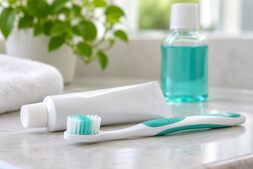
You finish brushing, reach for a cup of water and rinse away the foam. It feels like the natural final step. But rinsing after brushing can also wash away fluoride left by your toothpaste.
For most adults using a standard fluoride toothpaste, the usual advice is to spit out the excess rather than immediately rinsing with water. Mouthwash has its own role, and the right timing can depend on the product and your dentist’s instructions.
Here is how to make sense of the last part of your brushing routine, with practical guidance for patients at Prime Dental in Port Coquitlam.
Why Does Fluoride Toothpaste Stay Useful After Brushing?
Brushing removes plaque from tooth surfaces. Fluoride provides another benefit: it helps make teeth more resistant to decay. A mouth that feels minty is not the only goal.
The American Dental Association recommends that adults brush twice daily with fluoride toothpaste for at least two minutes, unless their dental professional advises otherwise. Choosing a toothpaste and using it consistently matter more than chasing a particular flavour.
Should You Avoid Rinsing After Brushing?
The NHS advises spitting out excess toothpaste without immediately rinsing with water. That allows fluoride from the remaining toothpaste to stay in contact with your teeth instead of being diluted and washed away.
This does not mean keeping a mouthful of foam or swallowing toothpaste. Spit out the excess. If the taste or texture bothers you, ask your dentist about a more comfortable product rather than giving up on fluoride toothpaste.
One rinse does not mean you have ruined your oral care. Think of this as a habit to adjust at your next brushing session.
Where Does Mouthwash Fit In?
Mouthwash is an addition to care, not a replacement for brushing and cleaning between teeth. Cosmetic rinses mainly freshen breath. Therapeutic rinses contain ingredients intended for a particular purpose, such as helping control plaque, gum inflammation or tooth decay.
For an ordinary fluoride rinse, general NHS guidance is to choose a separate time, such as after lunch, rather than use it immediately after brushing. It also advises avoiding food and drink for 30 minutes after a fluoride mouthwash.
However, products differ. The ADA notes that ingredients can affect the recommended sequence. Follow the label and any personalised instructions from your dentist or pharmacist, especially for a prescribed rinse. Do not change a prescribed routine simply to follow a general internet tip.
A Simple Routine to Discuss With Your Dental Team
- Morning: brush thoroughly with fluoride toothpaste and spit out the excess.
- During the day: if a rinse is recommended, use it at the advised time and follow its directions.
- Before bed: brush again, including the inner, outer and chewing surfaces of your teeth.
- Every day: clean between teeth using the method your dental team recommends.
You do not need to buy another product just to add a step. Ask what your current routine is missing before choosing a rinse.
What About Children?
Adult advice should not automatically become a child’s routine. Children need supervision and an appropriate amount of fluoride toothpaste. A dentist can recommend the amount and product for your child’s age and cavity risk.
The ADA advises against mouthwash for children under six unless a dentist recommends it, because young children may swallow the rinse. Keep toothpaste and mouthwash out of reach when they are not being used.
Frequently Asked Questions
Does Mouthwash Replace Fluoride Toothpaste?
No. A fluoride rinse may be helpful for some people, but it does not replace the cleaning action of brushing. Your dentist can explain whether it adds a useful benefit for you.
What If I Have Been Told to Use a Prescription Rinse?
Use the specific schedule you were given. If the instructions seem different from general advice about rinsing after brushing, ask the prescribing professional to clarify the order and interval.
Do I Need to Change Everything at Once?
No. Start with one question at your next visit: “Am I using my toothpaste and rinse at the right times?” Bringing the product names or packaging can make the discussion easier.
Get Advice That Fits Your Smile
At Prime Dental, your routine can be discussed as part of your general and family dental care. Tell us about the products you use and any discomfort that makes daily cleaning difficult.
Request an appointment or call (604) 941-0111.
Prime Dental
#203 – 2227 McAllister Ave.
Port Coquitlam, BC V3C 2A9
info@prime-dental.ca