
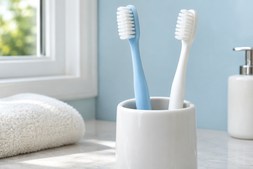
After brushing, it is easy to snap a cover over your toothbrush and tuck it into a drawer. A tidy-looking setup is not always the best place for a damp brush. At home, the goal is simple: rinse it, stand it upright and give it room to air dry.
Here is how to store your toothbrush at home and while travelling, without making your daily routine complicated.
Build a Simple After-Brushing Routine
The American Dental Association’s toothbrush-care guidance recommends rinsing away toothpaste and debris after each use, then storing the brush upright to air dry. A wet brush kept in a closed container provides conditions that encourage more microbial growth than open-air storage.
- Rinse thoroughly. Remove visible toothpaste and debris with tap water.
- Stand it upright. Choose an open holder that leaves the head exposed to air.
- Leave space between brushes. In a shared holder, keep the heads apart.
Make the setup easy to use. If the holder is crowded, give each person a separate space rather than squeezing more brushes into it. Different handle colours can help family members identify their own brush.
Should You Put a Cap on Your Toothbrush?
A cap can help protect a brush during transport, but it is not needed for everyday storage at home. MouthHealthy, the ADA’s patient-information website, advises against routinely covering toothbrushes or keeping them in closed containers. It also recommends separating brush heads and never sharing toothbrushes.
If your brush stays inside a closed travel case between every use, change the routine when you are home. Take it out after rinsing and let it dry upright.
How to Pack a Toothbrush for Travel
A toiletry bag needs a different approach from your bathroom counter. Keep the brush separate from other items in your luggage during the journey, then unpack it when you arrive.
The ADA’s dental travel tips suggest using a resealable bag to keep a toothbrush from touching other belongings. Open the bag at your destination and allow the brush to air dry. Protecting it during transport does not mean leaving it sealed throughout the trip.
- Pack your own brush rather than planning to share.
- Keep it separate from loose items in your wash bag.
- Set it upright after arrival instead of leaving it packed until the next use.
Avoid High-Heat Cleaning Shortcuts
The ADA advises against cleaning a toothbrush in a microwave or dishwasher because high heat may damage it. Routine care starts with rinsing and air drying. If you use a powered toothbrush, follow its manufacturer’s directions for cleaning the handle, head and charger.
Frequently Asked Questions
Can two people use the same toothbrush holder?
Yes, provided each person has their own brush and the heads remain separated. Give every brush enough room to dry upright.
Does an electric toothbrush need a cover at home?
The same air-drying principle applies to the brush head. Check the manufacturer’s care instructions for your model.
Is good storage a substitute for brushing?
No. Storage supports your routine; it does not clean your teeth. Continue brushing twice daily with fluoride toothpaste and cleaning between your teeth.
Ask About Your Home-Care Routine in Port Coquitlam
Bring questions about your toothbrush or brushing technique to your next visit. Prime Dental’s general and family dentistry team can help you review your routine.
Request an appointment at Prime Dental or call 604-941-0111. Visit us at #203 – 2227 McAllister Ave., Port Coquitlam, BC V3C 2A9.