
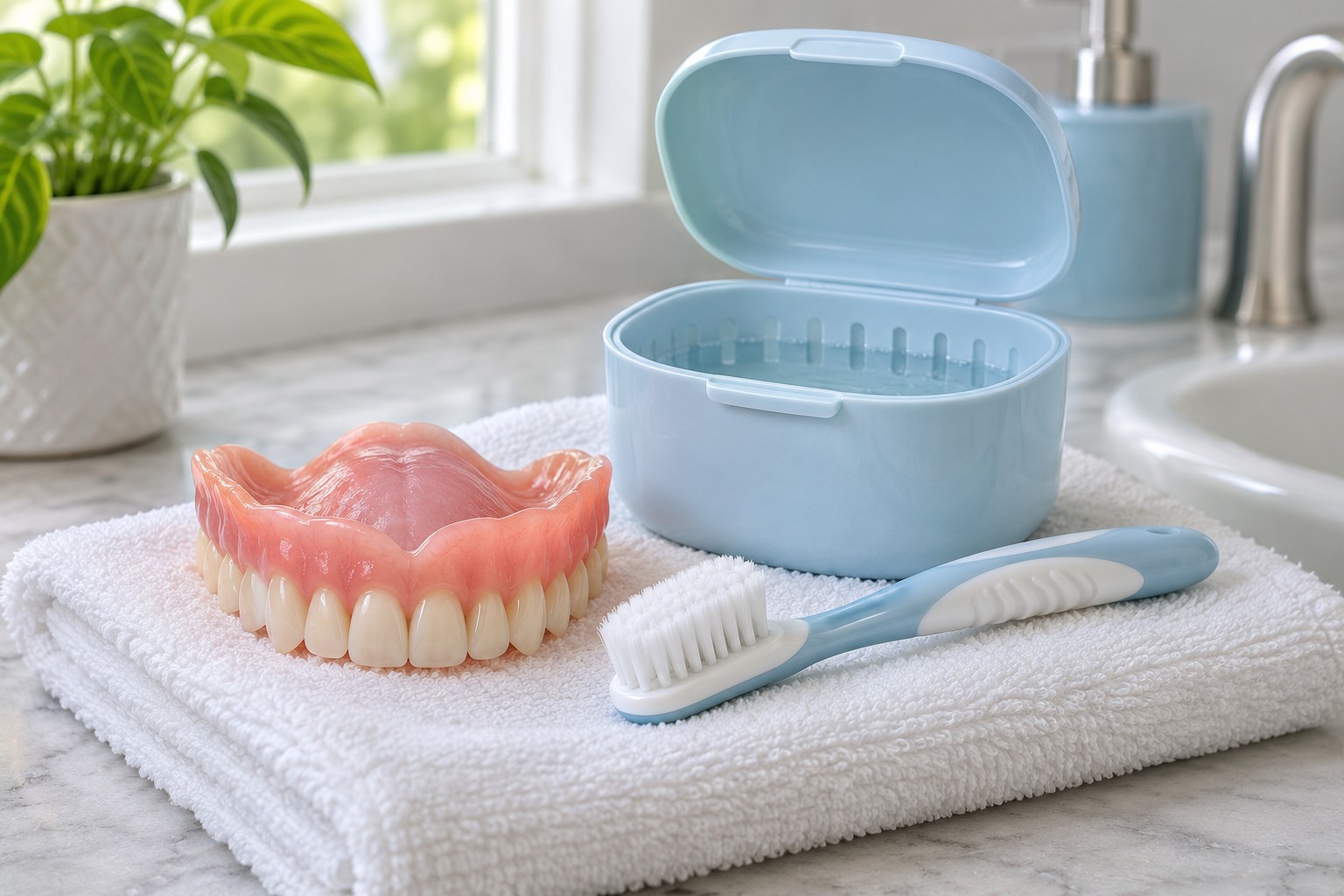
Taking care of removable dentures involves two things: cleaning the appliance and caring for the mouth beneath it. A simple evening routine can help you keep track of both.
This guide covers removable full and partial dentures. If you have just had teeth removed or received a new denture, follow your dental team’s specific instructions first.
Start with safe handling
Set out your brush, suitable cleanser and storage container before taking your denture out. Work over a folded towel or a basin of water to cushion an accidental drop. Hold the denture gently rather than squeezing it or pulling on a metal clasp.
Clean the denture every day
Rinse away loose food, then gently brush all surfaces, including the parts that sit against your gums. Use a soft brush and a non-abrasive product recommended for your denture material. Ordinary toothpaste can be too abrasive for dentures.
Soaking does not replace brushing. Use any denture cleanser outside your mouth, follow its directions for dilution and soaking time, and rinse thoroughly before putting the denture back in. The American Dental Association’s denture care guidance explains why both daily cleaning and appropriate storage matter.
Give your mouth attention, too
With the denture removed, gently clean your gums and other mouth tissues. If a brush feels uncomfortable, ask your dental team about using a clean, damp cloth. Clean any remaining natural teeth with fluoride toothpaste and clean between them.
Ask for a demonstration if clasps or supporting teeth are difficult to reach. Bring your usual brush to the appointment so the team can help you practise with it.
Take dentures out for sleep and store them safely
The Canadian Dental Association recommends overnight removal to let your mouth rest. An immediate denture after an extraction may come with different initial instructions, so check before changing that plan.
Keep the denture moist in a clean container as directed. Avoid hot or boiling water, which can distort it. Ask which soaking solution suits your appliance, particularly if it contains metal. Keep cleaning products out of reach of children and never swallow a soaking solution.
Know when to arrange a review
Contact your dental professional if a denture cracks, rubs, slips or starts making eating uncomfortable. Do not try to repair or reshape it yourself. Adding more adhesive is not a solution for a poor fit.
Even without natural teeth, you still need regular examinations of your mouth and denture fit. Ask how often to return and mention any sore area when booking.
Frequently asked questions
Can I use the same toothpaste on my teeth and dentures?
Use fluoride toothpaste for natural teeth. For the removable appliance, choose a denture-safe cleaning product instead. The NHS denture guide advises against ordinary toothpaste on dentures because it may damage them.
What should I bring to a denture-care appointment?
Bring the denture, its storage container and the names of your cleaner and adhesive. Note when discomfort happens and which part of the routine is difficult.
Discuss your routine at Prime Dental
Our general and family dentistry team can discuss your oral care questions. Request an appointment or call (604) 941-0111.
Prime Dental is at #203 – 2227 McAllister Ave., Port Coquitlam, BC V3C 2A9. Email info@prime-dental.ca.