
Dental Floss vs. Water Flosser: Which Is Better for Your Teeth and Gums?
Brushing your teeth twice daily is essential, but your toothbrush cannot reach every surface between your teeth.
That’s why cleaning between your teeth is an important part of maintaining healthy gums and preventing dental problems.
Traditional dental floss has been a familiar choice for decades. However, water flossers have become increasingly popular.
So, which option is better for your teeth and gums?
At Prime Dental in Port Coquitlam, we encourage patients to choose effective oral hygiene tools that suit their individual needs.
Why Is Cleaning Between Your Teeth Important?
Dental plaque forms naturally on tooth surfaces throughout the day. It contains bacteria that can contribute to cavities and gum inflammation.
Your toothbrush cleans exposed tooth surfaces, but some spaces between teeth are difficult to reach with bristles alone.
Interdental cleaning helps remove plaque and debris from these areas.
Without regular cleaning, plaque can accumulate near the gumline and contribute to gingivitis.
What Is Traditional Dental Floss?
Dental floss is a thin cleaning material designed to pass between neighbouring teeth.
It can remove plaque by making direct contact with the sides of your teeth.
Floss comes in several varieties, including waxed, unwaxed, and specialized designs.
When used correctly, traditional floss can be an effective tool for daily interdental cleaning.
Benefits of Traditional Dental Floss
- Affordable and widely available
- Easy to carry when travelling
- Requires no electricity or charging
- Can clean tight spaces between teeth
- Allows direct cleaning along tooth surfaces
However, flossing technique matters. Moving floss quickly between teeth without cleaning their sides may leave plaque behind.
What Is a Water Flosser?
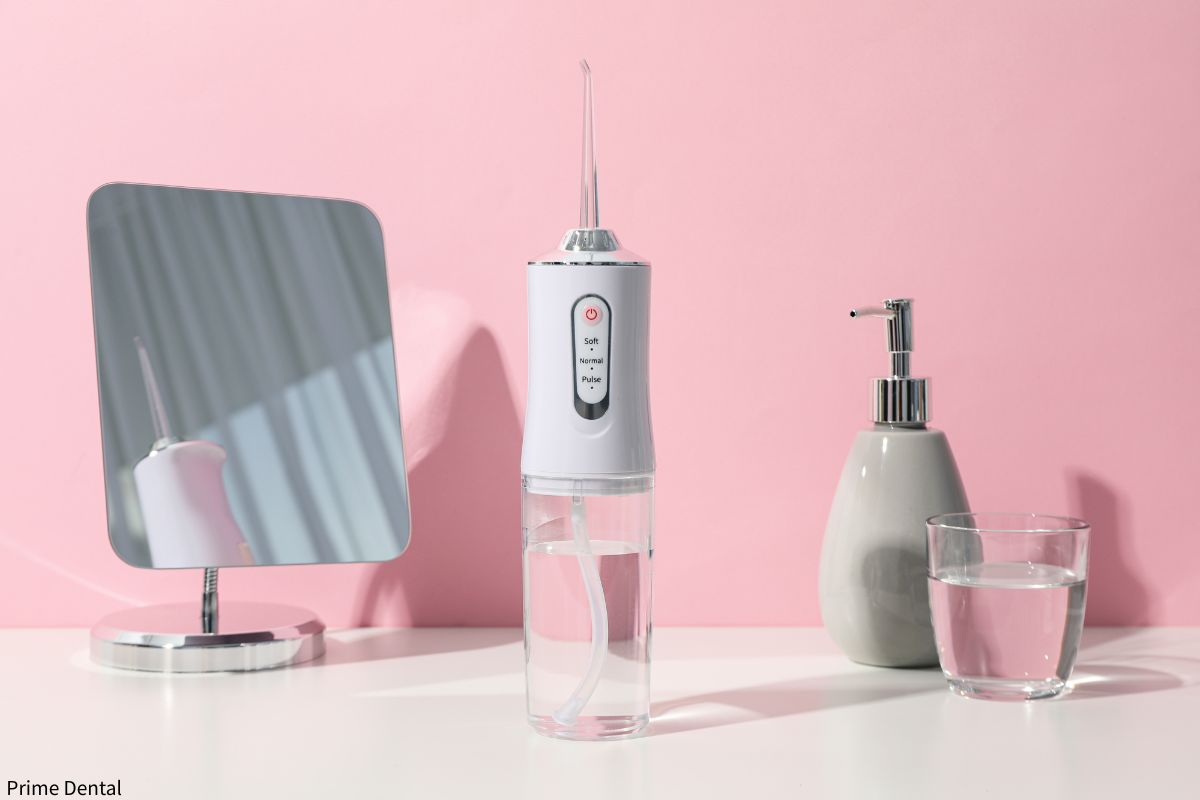
A water flosser is an oral hygiene device that directs a controlled stream of water between teeth and along the gumline.
It is sometimes called an oral irrigator.
Water flossers are available in countertop and cordless designs.
The water stream helps dislodge food particles and may reduce plaque and gum inflammation when used appropriately.
Benefits of Water Flossers
- May be easier for people with limited hand dexterity
- Useful around certain orthodontic appliances
- Can help clean around some dental restorations
- May improve gum health when used consistently
- Offers an alternative for people who struggle with string floss
Water flossers require appropriate technique and regular device cleaning.
Dental Floss vs. Water Flosser: Which Removes More Plaque?
Both methods can contribute to effective interdental cleaning.
Traditional floss mechanically disrupts plaque through direct contact with tooth surfaces.
Water flossers use a pulsating stream of water to clean around teeth and gums.
Research suggests water flossers can improve certain measures of gum inflammation and bleeding.
However, results vary across studies, devices, and cleaning techniques.
Neither tool guarantees complete plaque removal when used incorrectly.
Which Is Better for Bleeding Gums?
Bleeding gums can be a sign of inflammation, especially when plaque accumulates near the gumline.
Both traditional floss and water flossers may help improve gum health when used correctly.
Some patients find a water flosser more comfortable than string floss.
However, persistent bleeding should not simply be attributed to your cleaning method.
If your gums regularly bleed, a dental examination can help identify the underlying cause.
Are Water Flossers Better for Braces?
Orthodontic brackets and wires create additional spaces where food particles and plaque can accumulate.
Traditional flossing may require special threaders or other cleaning aids.
A water flosser can make cleaning around certain orthodontic appliances more convenient.
However, it may not replace every cleaning tool recommended by your orthodontic or dental team.
Patients searching for family dentistry near me can ask about suitable cleaning methods for children and teenagers with braces.
What About Dental Implants and Bridges?
Dental implants, bridges, and other restorations require careful cleaning around their surrounding tissues.
Some water flossers can help clean difficult-to-reach areas.
Specialized floss, interdental brushes, or other devices may also be recommended.
The most appropriate method depends on your restoration and individual oral health.
Explore Prime Dental’s dental services for information about preventive and restorative care.
Which Is Easier to Use Every Day?
Convenience matters because an effective cleaning tool only helps when you use it consistently.
Traditional floss is portable and inexpensive, but some people find it difficult to handle.
Water flossers may feel easier to use, especially for people with reduced finger mobility.
However, they require water, maintenance, and sometimes access to electricity.
Choose a method that fits comfortably into your routine.
How to Use Traditional Dental Floss Correctly
Proper technique helps remove plaque without unnecessarily irritating your gums.
- Use a comfortable length of dental floss.
- Gently guide it between neighbouring teeth.
- Curve the floss around one tooth in a C-shape.
- Move it carefully along the tooth surface and beneath the gumline.
- Repeat against the neighbouring tooth.
- Use a clean section as you move through your mouth.
Avoid snapping floss forcefully against your gums.
How to Use a Water Flosser Correctly
Always follow the manufacturer’s instructions for your specific device.
- Fill the reservoir with clean water.
- Begin with a comfortable pressure setting.
- Lean over the sink to reduce splashing.
- Direct the tip toward the gumline.
- Move slowly along each tooth and between teeth.
- Clean and store the device according to its instructions.
Avoid using excessive pressure, especially if your gums are sensitive.
Can You Use Both Dental Floss and a Water Flosser?
Yes. Some patients use both methods as part of their oral hygiene routine.
For example, traditional floss may help clean tight contacts, while water irrigation may assist around difficult areas.
However, using multiple tools is not necessary for everyone.
Your dental hygienist can recommend a practical routine based on your teeth and gum condition.
Does a Water Flosser Replace Brushing?
No. A water flosser is designed to complement your oral hygiene routine.
Continue brushing twice daily with fluoride toothpaste.
Cleaning between your teeth should also remain part of your routine.
Neither flossing method replaces professional dental examinations or cleanings.
What If Your Teeth Are Very Close Together?
Tight spaces between teeth may make certain interdental tools difficult to use.
Traditional floss can be useful because it is thin and flexible.
However, forcing floss or interdental brushes into tight spaces can cause discomfort.
Ask your dental team to demonstrate a suitable method if cleaning between certain teeth is difficult.
Are Water Flossers Worth the Cost?
Water flossers generally cost more than traditional dental floss.
They may also require replacement tips and occasional maintenance.
For some patients, the convenience encourages more consistent interdental cleaning.
However, traditional floss remains an effective and affordable option.
Patients seeking affordable dental care in Coquitlam do not necessarily need expensive oral hygiene devices.
What Do Dentists Recommend?
There is no single cleaning tool that is best for every patient.
Your dentist or dental hygienist may consider your gum health, tooth spacing, restorations, and ability to clean effectively.
Some patients benefit from traditional floss. Others may find water flossers or interdental brushes more suitable.
If you are searching for a dentist near me, ask for a personalized interdental cleaning demonstration during your appointment.
Why Regular Dental Checkups Still Matter
Even with excellent home care, dental problems can develop in areas that are difficult to inspect yourself.
Routine examinations help identify early cavities, gum inflammation, and problems around dental restorations.
Professional cleanings also remove hardened tartar that home cleaning cannot eliminate.
For more preventive oral health information, visit the Prime Dental blog.
Choose the Cleaning Method That Works for Your Smile
Traditional floss and water flossers both have useful roles in oral hygiene.
The best choice depends on your individual needs, comfort, and ability to use the tool correctly.
Consistent brushing, interdental cleaning, and regular dental care work together to protect your teeth and gums.
At Prime Dental, we can help you choose an oral hygiene routine suited to your smile.
Ready to improve your daily dental care? Contact Prime Dental or call (604) 941-0111 to schedule an appointment.
Prime Dental
2227 McAllister Ave #203
Port Coquitlam, BC V3C 2A9, Canada
Phone: (604) 941-0111
Website: www.prime-dental.ca